Sex worker rights are workers rights
Maggie Chapman's speech from the debate about Ash Regan's dangerous anti-sex worker bill.

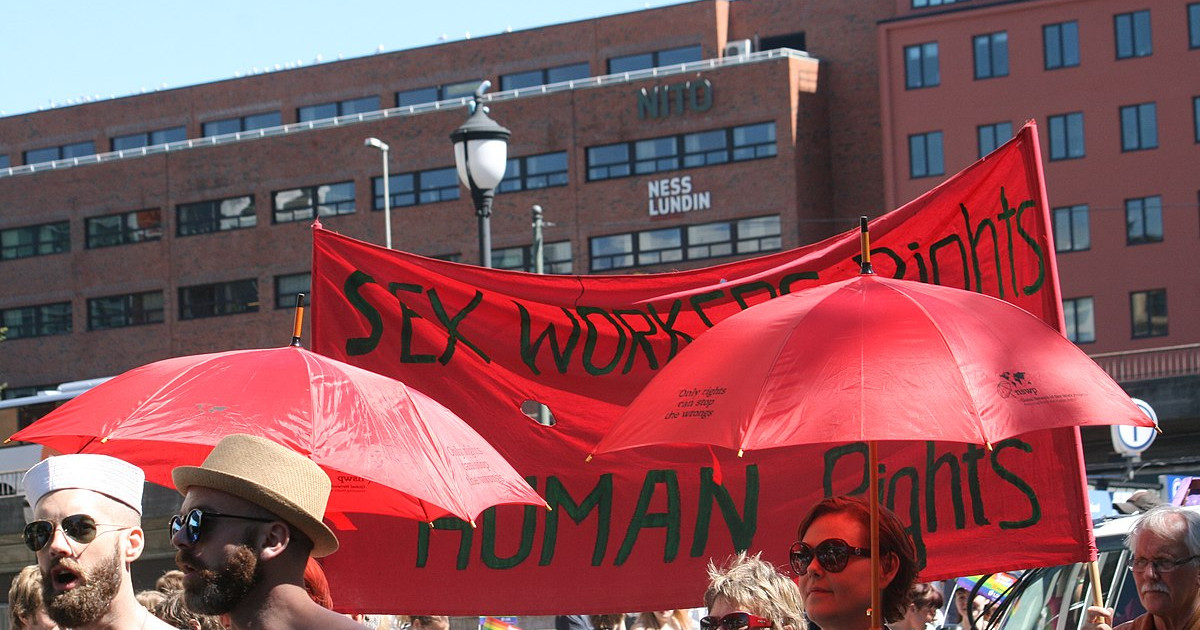
The Scottish Greens support workers. Retail workers. Hospitality workers. Healthcare workers. Care workers. And, yes, sex workers.
Because sex work is work.
It might not be work one agrees with. It might not be work one would ever do. One might not ever procure the services of a sex worker.
But some people do that work.
Many of them do it of their own free will. They find it meaningful and fulfilling work. It earns them a good living and puts food on their table.
I accept that it not the case for all.
For those who turn to sex work out of sheer desperation, then there should be clear supports in place to allow them to get out of sex work and into a job they actually want to do.
We cannot – we must not – ignore the systemic barriers that drive some people into sex work they would prefer not to do: poverty, disability, caring responsibilities, and a lack of viable alternatives.
But we also cannot legislate these issues away by punishing clients, and by extension, workers.
And those who coerce or traffik sex workers should feel the full force of the law.
But for those who do this work, do it freely, and get value from it, who are we to make it harder and less safe to do so.
We should never make policy without listening to those who it impacts. And the vast majority of workers are against criminalising the purchase of sex. Many believe it makes them less safe.
Indeed, as one sex worker told the Committee:
“I currently fully vet all of my clients with legal ID and bank transfer deposits, the proposed bill will mean this will be unfeasible.
“I am safe as I know who I am encountering, but criminalising clients mean only those who are willing to break the law will seek out services, and therefore be less compliant with my current safety measures.”
Amnesty International has documented the impact of ‘End Demand’ legislation on the human rights of sex workers in Norway, Ireland and France and found that it compromises sex workers’ safety by involving them in criminalisation as Police look for clients, or it criminalises third parties, such as landlords.
Evidence from other countries shows that making sex work less visible doesn’t eliminate demand: it merely pushes sex workers further underground, increasing their vulnerability to violence and abuse.
Workers are forced into more precarious interactions, in less safe locations, and with less ability to demand safer working conditions or agree on boundaries. That is not protection; that is punishment.
This is even more likely with this bill, because it does not decriminalise brothel keeping, defined as where more than one sex worker works in the same place. Not permitting sex workers to legally work together indoors has the effect of making sex workers more isolated, and more vulnerable to potential violence.
And sex workers will be more unsafe, not just from violent clients, but from stigma and the associated harms.
The stigma associated with prostitution prevents sex workers getting appropriate health care, and criminalisation will stigmatise workers as well as clients.
Evidence from around the world has shown a clear link between criminalisation and sex workers’ increased risk of HIV, STIs, and poor emotional health.
That’s why experts who have experienced the Nordic model support decriminalisation.
Researchers from the London School of Economics conducted 210 formal interviews with sex workers, police, social workers, and policymakers in Sweden, Norway and Finland, 96 per cent of interviewees oppose the sex buyer laws in these countries.
The research found that, even without direct criminalisation of sex workers, sex workers are de facto penalised though the enforcement of intersecting immigration, third-party and fiscal policies. It finds that policing still targets sex workers, with ramifications including evictions and deportations.
I do want to address the issue of the trafficking of people for sex work.
Trafficking people to force them into sex work is reprehensible, but we do not need a new law to tackle that. That law already exists.
As the English Collective of Prostitutes have said:
“We have to look at the effectiveness of the law in that regard and the effectiveness of the support for victims of trafficking, but that is completely unconnected to the question of criminalising clients.”
The Committee has heard there is no evidence from Sweden or other countries that that criminalise the purchase of sex that such laws have an impact on trafficking. We can and should crack down on traffickers, but we can do that without harassing people who are just trying to earn a living.
There is another way, as sex workers themselves have said.
Full decriminalisation of sex work, of purchase and of running locations where sex work happens can create the space for collective safety.
It allows sex workers to work together, to unionise, to support one another, to access healthcare, housing and social security, and to work in safe spaces, without the looming threat of being dragged into criminal justice processes.
Scotland for Decrim argues that only by fully removing punitive laws do sex workers gain “the power to choose when and how we work.”
The power and the dignity of their labour that all other workers have. Sex workers are simply asking for the same treatment.
As a Scottish Green, I believe deeply in harm reduction, social justice, and bodily autonomy. Where sex work happens between consenting adults, I believe the state should support people, not penalise them for how they choose to live and work.
We must trust sex workers with their own lives. We must listen to them, and we must follow their demands.
We stand for sex workers’ rights in Scotland: for safety, dignity, and freedom.