Public must be at heart of data centre decision
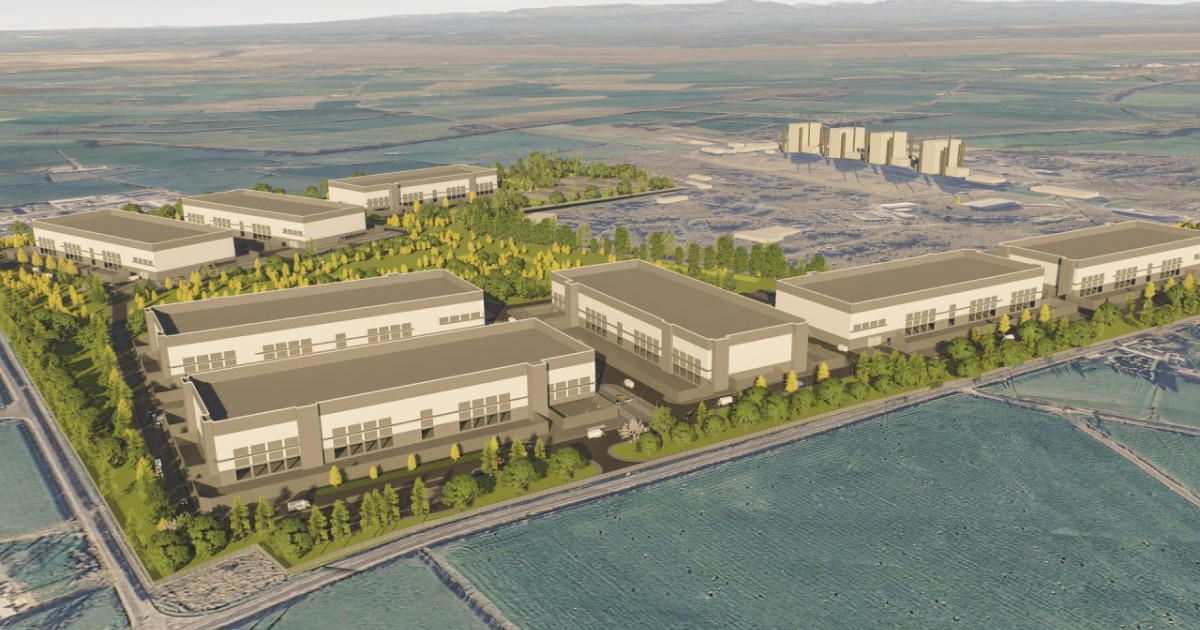
The Scottish Greens are calling on the First Minister to hold a public consultation on national planning guidance for AI hyperscale data centres.
In a letter to John Swinney, Scottish Green MSP Patrick Harvie noted that the Scottish Government had committed to ensuring the public has “opportunities to participate in the design and delivery of climate and nature policies that affect them” and that this must include AI hyperscale data centres.
The electricity from hyperscale data centres threatens to derail Scotland’s progress to decarbonise, and current proposals would equal around twice Scotland’s peak electricity demand.
Further planning applications for AI hyperscale data centres are continuing to emerge. Just last week, an application was lodged for a colossal site at Chapelcross in Dumfries and Galloway.
If approved, the data centre would have a capacity of 1GW – bigger than any other data centre in the world. If operated at full capacity, the facility would use 7 million MWh of energy a year, equivalent to the energy used by over two million homes.
Patrick Harvie, Scottish Greens spokesperson for Economy, Transport and Tourism, said:
“It is imperative that the Scottish Government gets this right, and doesn’t leave communities behind while bending to the whim of well-funded developers who are seeking to make a profit from Scotland’s resources.
“Communities across Scotland must be involved in the creation of national planning guidance for AI hyperscale data centres.
“It is essential that a broad range of community representatives, credible environmental voices, and energy experts are actively engaged with this process and their feedback used to shape this guidance at a critical point of the process.
“I urge the First Minister to launch a public consultation on this as soon as possible.”
TEXT OF PATRICK’S LETTER TO JOHN SWINNEY
Dear First Minister,
Public involvement in the development of hyperscale data centre national planning guidance.
I am writing to follow up on the commitment made during First Minister’s Questions on 17 September regarding proposals for hyperscale data centres across Scotland.
During your exchange with Ross Greer MSP, you stated that ‘national guidance will set out all the relevant issues that have to be taken into account in the determination of applications’ for hyperscale data centres.
I also note the publication this week of the ‘Our Scotland, Our Future: Public Engagement Strategy for Climate and Nature 2026’, which sets an outcome for the Government to ensure that the public has ‘opportunities to participate in the design and delivery of climate and nature policies that affect them.’ To achieve this, it is essential that communities across the country are meaningfully engaged in the development of the new national guidance on hyperscale data centres given the serious threat they pose to Scotland’s climate targets.
In particular, hyperscale data centres’ electricity demand threatens to derail Scotland’s progress to decarbonise, with estimates that the current proposals would equal around twice Scotland’s peak electricity demand and further proposals continuing to emerge.
At a time when we must be maximising our efforts to decarbonise our heating and transport systems, this scale of increased demand for Scotland’s renewable electricity is incompatible with achieving Scotland’s net zero targets. Communities around the country are rightly concerned about the impacts of these developments and the lack of assessment of the cumulative impact of these developments on Scotland’s carbon budget and actions set out in the latest Climate Change Plan.
I welcome the Government’s acknowledgement that a strategic approach is needed and that national guidance will be developed by the end of the year. However it is essential that a broad range of community representatives, credible environmental voices and energy experts are actively engaged with this process and that their feedback meaningfully shapes the final guidance. I ask you to urgently give a clear commitment that a full public consultation will take place as part of the development of the national guidance.
Kind regards,
Patrick Harvie